
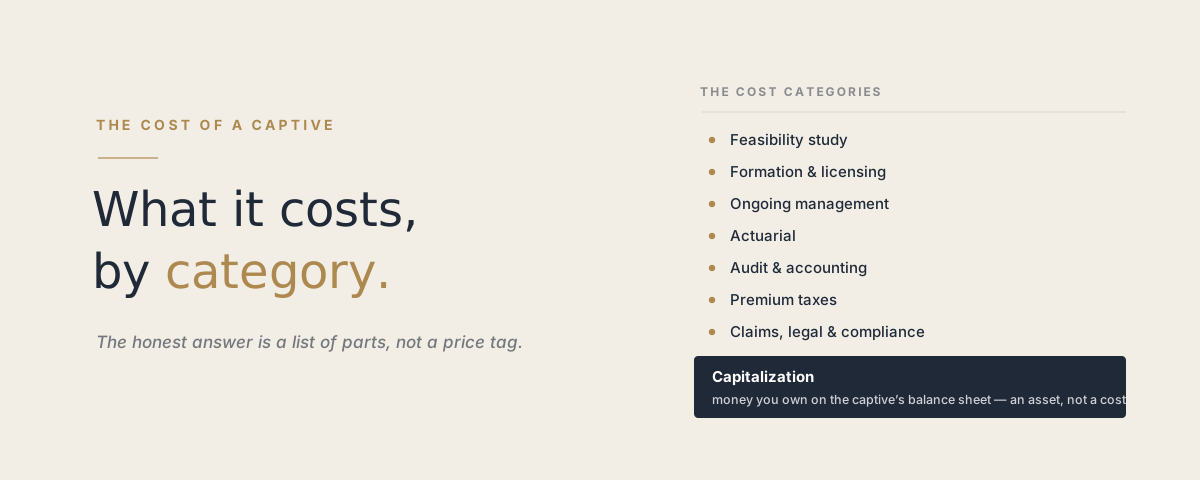
How Much Does It Cost to Start a Captive? An Honest Breakdown of the Cost Categories
When owners ask us how much it costs to start a captive, they usually want a single figure — and the most honest thing we can say is that no responsible answer comes in that shape. A captive is an insurance company you own, not a product with a sticker price, and what it costs depends on your business in ways no brochure can know in advance. Anyone willing to quote you a fixed number sight-unseen is, charitably, guessing.
But “it depends” is a cop-out if you stop there, and we don’t intend to. The useful version of the answer is not a number — it is a clear picture of the categories you are paying for, why each one exists, and what makes them larger or smaller for one business than another. Get that picture straight and you can read any proposal critically, recognize what is missing, and understand exactly where your real number eventually comes from. This piece is that breakdown.
First, the distinction that changes how you read everything else
Before the list, there is one idea that has to land, because almost everyone gets it wrong on the first pass: the capital you fund into a captive is not a cost.
When you start a captive, you capitalize it — you fund capital and surplus into the company so it has the financial strength to operate as a genuine insurer and pay claims. That money does not disappear. It sits on the captive’s own balance sheet as an asset, available to pay losses and to build surplus over the years. It is money you own, held inside a company you own — not money you have spent.
That is completely different from the expenses of running the company — management fees, actuarial work, audit, premium taxes, claims handling. Those are genuine outflows, paid out and gone. So when you look at the full economics of a captive, you have to keep two columns separate: the services you pay for to operate an insurance company, and the capital you fund that remains yours. Collapse them into one “cost” and you will badly misjudge what a captive actually asks of you.
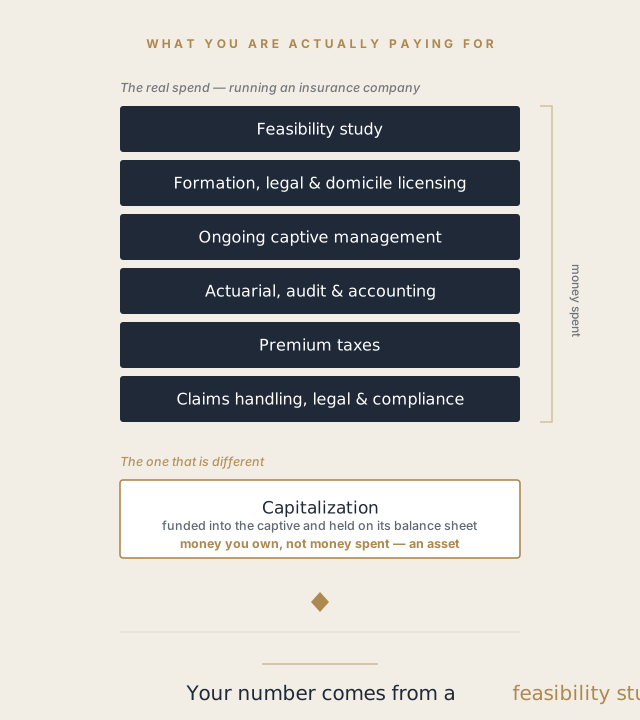
With that straight, here are the categories themselves.
The cost categories, named honestly
The feasibility study
Every sound captive starts with a feasibility study — the analysis that decides whether a captive should exist for you at all, which structure fits, and what the economics realistically look like on your own numbers. It is the first thing you pay for, and on purpose: it is the step that can tell you no before you spend anything building a company that should not exist. We cover exactly what it examines in what actually happens in a captive feasibility study; for the purposes of cost, treat it as the deliberate, separate, up-front step it is.
Formation, legal, and domicile licensing
To stand the company up, you incur the one-time work of formation: the legal drafting, the application to the chosen domicile’s insurance regulator, and the licensing process that turns a plan into a chartered insurance company. This is where a captive becomes a real, regulated entity rather than an idea — and where the domicile you choose starts shaping the bill, because each jurisdiction sets its own requirements and process.
Capitalization — funded, not spent
Capitalization belongs on the list because you have to fund it to start — but as established above, it is the category that is not an expense. You fund capital and surplus into the captive so it can operate as a genuine insurer; that money stays on the captive’s balance sheet as an asset you own. We name it here so the picture is complete, with the same asterisk every time: it is money you own, not money you have spent.
Ongoing captive management
Once the company exists, it has to be run, and most owners do not run it themselves. The captive manager handles the day-to-day operation of the insurance company — regulatory filings, coordination of the other service providers, keeping the captive in good standing with its domicile, and the administrative machinery of an operating insurer. This is a recurring, year-after-year category, not a one-time cost.
Actuarial
A captive has to price its coverage and set its reserves the way any real insurer does — defensibly, on sound actuarial principles, at arm’s length. That is the actuary’s job: pricing the policies and opining on reserves so the numbers reflect the actual exposure rather than a desired result. This work is not optional polish; pricing to a target instead of to the genuine risk is precisely the pattern the courts have rejected, so credible actuarial work is part of what makes a captive defensible, not just functional.
Audit and accounting
As a regulated insurance company, a captive keeps formal books and is typically subject to an independent audit and ongoing accounting. This is the financial- statement discipline that an insurer is held to — recurring each year, and part of operating as a real company rather than a paper one.
Premium taxes
Captives generally owe premium tax in their domicile, the way insurers do. We are naming this as a category, not stating a rate: premium-tax treatment is set by each domicile and is a domicile-specific factual matter, not a single national figure. What matters for understanding cost is simply that it is a real, recurring line and that where you domicile affects it. This is general information, not legal or tax advice — see our disclosures.
Claims handling, legal, and compliance
Finally, a captive that is doing its job pays claims — and paying claims properly takes administration: claims handling, plus the ongoing legal and compliance work of keeping a regulated insurer in line with its domicile’s rules. These are the recurring obligations of an operating company. A captive is not a structure you set up once and forget; it has year-round work, and that work has a cost.
When a fronting arrangement is involved, add two things
Some captives need a fronting arrangement — a licensed, rated, admitted carrier that issues the policy on the captive’s paper and reinsures the risk back to the captive — because a lender, a landlord, a contract, or a regulator requires coverage from a rated, admitted carrier that a captive itself cannot provide. When fronting is used, it adds to the cost in two ways: a fronting fee the carrier charges for standing in front, and collateral the carrier typically requires (often a letter of credit) because it is on the hook if the captive fails to pay it back. Not every captive needs a front, but when yours does, those two items join the picture — and like everything else here, their sizing is specific to your arrangement.
Why the same list produces very different numbers
Notice that everything above is a list of categories, not amounts. That is deliberate, and it is also the honest reason there is no flat price: the categories are the same from one captive to the next, but how large each one is depends entirely on your facts. A handful of drivers do most of the work:
- Domicile. Each jurisdiction sets its own licensing requirements, ongoing obligations, and premium-tax treatment. Where you domicile moves several categories at once.
- Structure. A single-owner micro-captive, a group captive, and a cell arrangement each carry different cost profiles — different formation work, different management, different economics of scale.
- Lines and limits. What you insure and at what limits drives the actuarial work, the capital the captive needs, and the complexity of running it.
- Complexity. More entities, more lines, patchier data, and more moving parts all add work across multiple categories.
- Fronting and reinsurance. Whether you need rated paper or reinsurance, as above, adds both cost and structure.
Two businesses can sit down with the identical list of categories and walk away with very different totals, because their domicile, structure, lines, and complexity are different. The list is universal; the number never is.
The honest bottom line
So, how much does it cost to start a captive? The honest answer is that the categories are knowable and the number is not — not until someone has modeled your actual business. There is no responsible flat figure, and the surest sign that you are being sold rather than advised is a fixed price quoted before anyone has looked at your risk, your losses, your domicile, and your structure. The cost of a captive is the cost of running real insurance, and real insurance is priced to the facts.
That is exactly what a feasibility study is for. It takes the categories above and puts your numbers into them — your domicile options, your structure, your lines, your loss history — and produces an honest, all-in picture of what a captive would cost you, alongside the more fundamental question of whether one makes sense for you at all. If you want to understand the analysis itself, what actually happens in a captive feasibility study walks through it; if you are still weighing whether a captive is right in the first place, is captive insurance worth it is the decision-stage companion to this one, and what is a captive is the ground-floor explainer.
And the two routes the categories apply to are the same two routes a study would weigh: a single-owner 831(b) captive or a group captive for mid-market businesses. Whichever fits, the way to turn this list of categories into your actual number is the same: a feasibility study, built on your facts, before anything is formed.
Frequently asked questions
How much does it cost to start a captive?
There is no honest flat number, and anyone who quotes you one before seeing your business is guessing. What we can tell you plainly is what you pay for: a feasibility study up front; formation, legal, and domicile licensing to stand the company up; then ongoing captive management, actuarial work, audit and accounting, premium taxes, and claims handling each year. Separately, you fund the captive’s capital — which is money you own on its balance sheet, not money spent. The size of each category depends on your domicile, your structure, and the lines you write, which is exactly what a feasibility study models on your own numbers.
Is the money I put into the captive a cost?
Mostly no — and this is the single most misunderstood part of the question. The capital and surplus you fund into a captive is not an operating expense; it is capitalizing an insurance company you own. That money sits on the captive’s balance sheet as an asset, available to pay claims and build surplus over time. It is money you own, not money you have spent. The genuine expenses are the services that run the company — management, actuarial, audit, premium taxes, claims handling — and those are real and recurring. Keeping the two straight is the difference between reading a captive’s economics correctly and badly mis-reading them.
Why does the cost of a captive vary so much from one business to another?
Because the cost categories are the same but their sizing is not. The biggest drivers are your domicile (each sets its own licensing requirements and premium-tax treatment), your structure (a single-owner captive, a group captive, and a cell each carry different cost profiles), the lines and limits you write, the overall complexity of the program, and whether a fronting arrangement and reinsurance are involved. Two businesses can face the same list of categories and end up in very different places. That is why a credible number comes from modeling your facts, not from a brochure. This is general information, not legal or tax advice — see our disclosures.
Does a feasibility study cost extra, or is it part of forming a captive?
It is its own step, and deliberately so. A feasibility study is the analysis that comes before anything is formed — it tells you whether a captive even makes sense for you, which structure would fit, and what the full economics realistically look like on your numbers. It is a cost in its own right, but it is also the cost that can save you from the far larger expense of forming a captive that should not exist. You can read what a study actually involves in what actually happens in a captive feasibility study.
Feasibility Study
See whether a captive fits your business.
Every engagement starts with a feasibility study — an honest read on whether a captive is right for you before anything is formed.