
Feasibility Study
Start with a feasibility study
Before forming anything, there is one honest question to answer: is a captive actually right for your business? A feasibility study is how you find out — a no-obligation analysis of whether a captive insurance company fits your risk and your economics. Insurance first; the numbers follow.
What it is
What a feasibility study analyzes
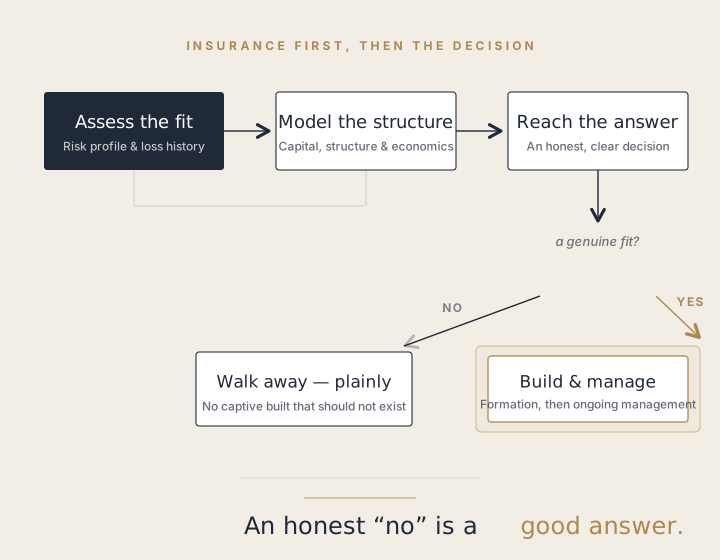
A feasibility study is a structured, advisory look at whether a captive is a sound risk-financing decision for your business — not a sales exercise, and not a foregone conclusion.
It examines the things that actually determine whether a captive works for you:
- Your risk profile and loss history — whether you carry genuine, insurable risk a captive could finance.
- Whether a captive would qualify as real insurance, including a credible path to risk distribution.
- The structure that would fit — a micro-captive or a group captive.
- The capital the captive would require and how it would be funded.
- The projected economics — loss funding, payback period, and realistic return — modeled on your numbers, not a brochure.
Where tax treatment is relevant, it is analyzed as a consequence of operating genuine insurance — never the reason to proceed. The study tells you whether the insurance makes sense first.
What you get
A clear, honest decision
You walk away knowing where you stand — with enough detail to make the call on your own numbers.
By the end, you have a straight answer to three questions: whether a captive is right for your business, which structure would fit if so, and what the economics realistically look like. That is the whole point of doing the analysis before anything is formed.
And the answer is sometimes no. If your risk, loss history, or economics do not support a captive, the study will say so plainly — and you will have saved yourself the cost and effort of building one that should not exist. An honest “not a fit” is a successful feasibility study.
Why it comes first
A real captive starts with a real feasibility analysis
Tessera does not form captives for businesses they do not suit. The feasibility study is how both of us find out — before any commitment.
The arrangements that get businesses into trouble are the ones built backward, without first testing whether they are genuine insurance. Starting with an honest feasibility analysis is part of the same discipline that makes a captive defensible in the first place — the rigor we describe on our compliance page. Advice comes before management; this is where the advice begins.
Request a study
Tell us about your business
Share a few details and we will review whether a feasibility study makes sense for you. Every field helps us give you a more useful first response.
Captives are generally most effective for established businesses with meaningful insurance spend and a strong loss history. The feasibility study is how we determine whether the economics work for yours — there is no minimum to inquire.
What happens next
We review, then we reach out
A real person — not an autoresponder — reviews every inquiry.
After you submit, we review your details and reach out shortly to discuss whether a feasibility study makes sense and what it would involve. There is no obligation, and no pressure to proceed. If you would rather start with a conversation, reach us directly: