
Can a Captive Cover Business Interruption Without Damage?
Yes, when priced from real exposure: how a captive covers income losses with no physical damage, and the pricing tests it must pass.
Insights
Notes and explainers on captive insurance — what the structures are, who they fit, and how to build them as genuine insurance rather than a tax result. Written for business owners and the advisors who counsel them.
Yes, when priced from real exposure: how a captive covers income losses with no physical damage, and the pricing tests it must pass.
Yes, when priced from your own claims data: how captives cover recall expense and warranty claims the commercial market often limits.
Yes, in part: how a captive funds cyber retentions and gaps beside a commercial cyber policy, why controls come first, and the limits.
How manufacturers use captives for product liability retentions, recall expense, and warranty risk, and what makes a manufacturer a good fit.
How medical practices and physician groups use captives and risk retention groups for malpractice and practice risks, and who fits.
How real estate owners use captives for deductibles, hard-to-place property risk, and liability gaps, and why catastrophe stays reinsured.
How multi-unit restaurant groups and franchisees use captives for workers’ comp, liability, and auto, and why every location’s habits count.
How roofing contractors use group captives when the commercial market tightens, why falls drive results, and what a roofer needs to fit.
How trucking fleets use group captives for auto liability, cargo, and workers’ comp, what a fronting carrier does, and which fleets fit.
Risk retention groups insure members’ liability across states under federal law; captives insure many risks from one domicile. How to choose.
How a dealer-owned reinsurance company works, the products it reinsures, what makes it genuine insurance, and what dealers should ask first.
When a micro-captive can make sense for a dental practice, the real risks it can insure, and the pitch patterns that should make you walk away.
How staffing firms use group captives for workers’ comp, why the client worksite drives results, and what a staffing firm needs to fit.
How a micro-captive claim is reported, reviewed, paid or denied, and documented — and why a real claims record is evidence the insurance is real.
Forming a captive takes months, not weeks: the steps from feasibility study to license, what sets the pace, and how to avoid delays.
How self-funded employers share medical stop-loss risk through a group captive, who fits, and why benefits rules differ from P&C captives.
How a captive reimburses deductibles on your commercial policies, why it turns absorbed losses into funded risk, and when it makes sense.
What a captive actuary does: tests feasibility, prices premiums at arm’s length, sets reserves, and checks capital — the independent check.
A captive’s yearly cycle: board meetings, a financial audit, actuarial review, regulatory filings, and tax filings handled with your own advisers.
What a captive manager actually does: keeping the captive licensed, running its books, coordinating its advisers, and managing renewals.
How owners close, sell, or wind down a captive: run-off, regulator approval, the tax questions, and why the exit plan belongs at formation.
How contractors use captives for workers’ comp, general liability, and auto, who fits, and why safety discipline decides whether it works.
When a micro-captive owner needs its own tax attorney, what that specialist does that a captive manager should not, and how to vet one.
How a captive holds and invests its cash: claims reserves come first, liquidity follows the claims, and the domicile regulator sets the limits.
How a workers’ comp captive works for employers: the loss fund, claims handling, state rules, and the safety record it rewards.
Yes — captive insurance is a long-established, legitimate tool. What the IRS targets is abusive arrangements that aren’t real insurance. Here’s the line.
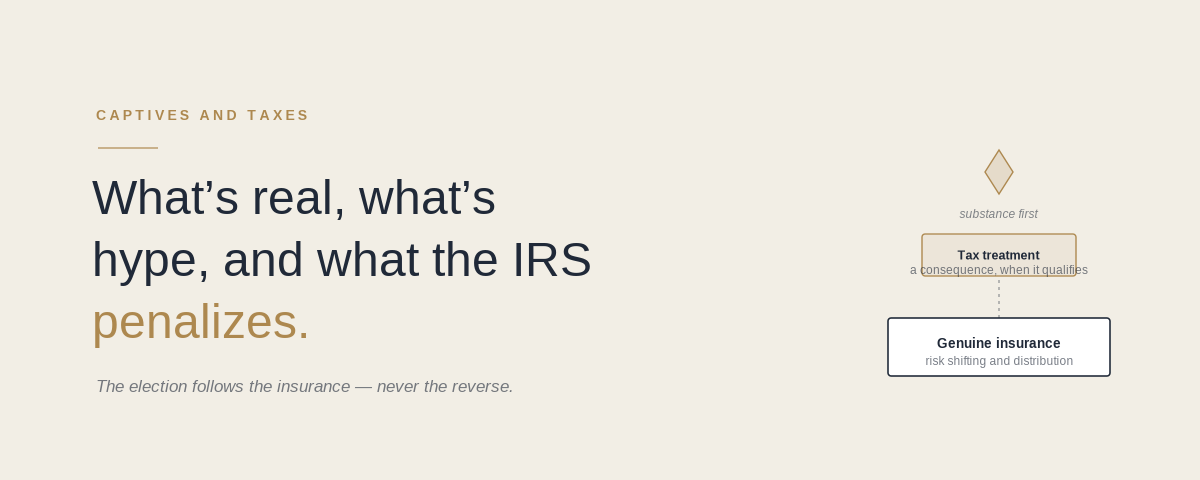
How captive insurance taxation actually works, the promoter pitches that get people penalized, and why the tax election follows the insurance.
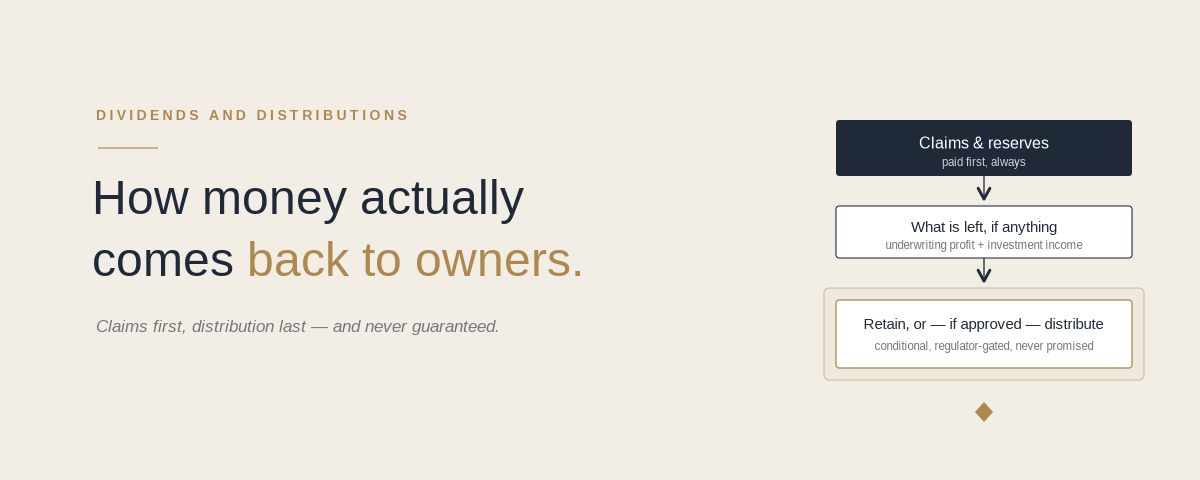
How value returns from a captive — underwriting profit and investment income, claims first, and distributions that are conditional and regulator-approved.
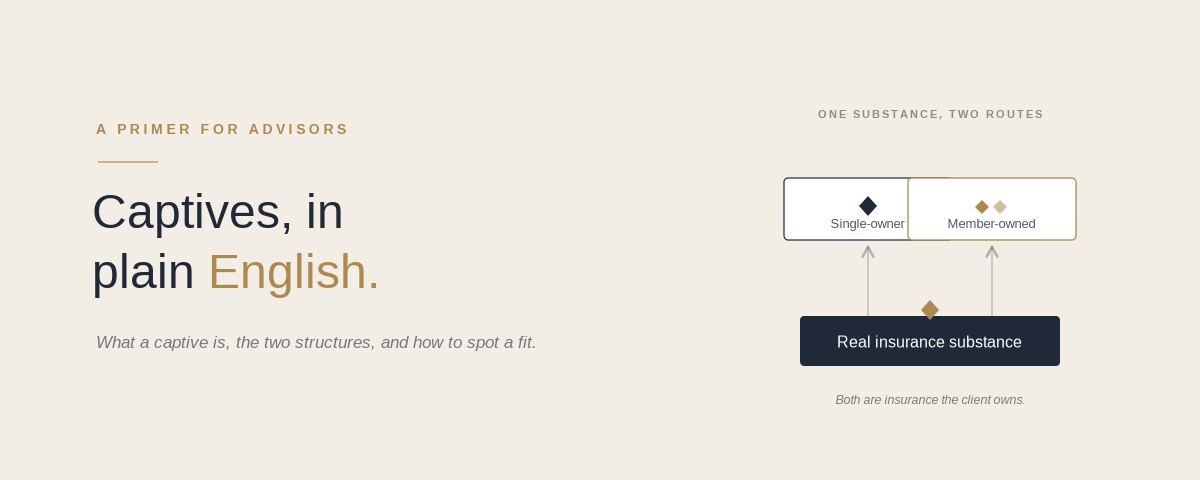
A plain-English primer on captive insurance for CPAs, attorneys, and advisors: what a captive is, the two structures, and how to spot a fit.
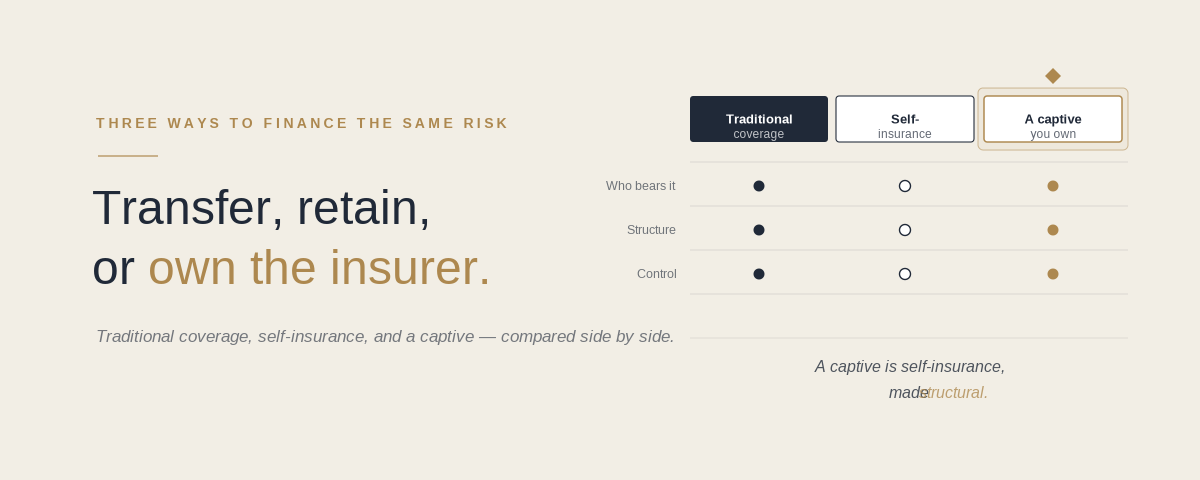
A side-by-side comparison of traditional commercial coverage, self-insurance, and a captive you own — on control, cost behavior, risk, and fit.
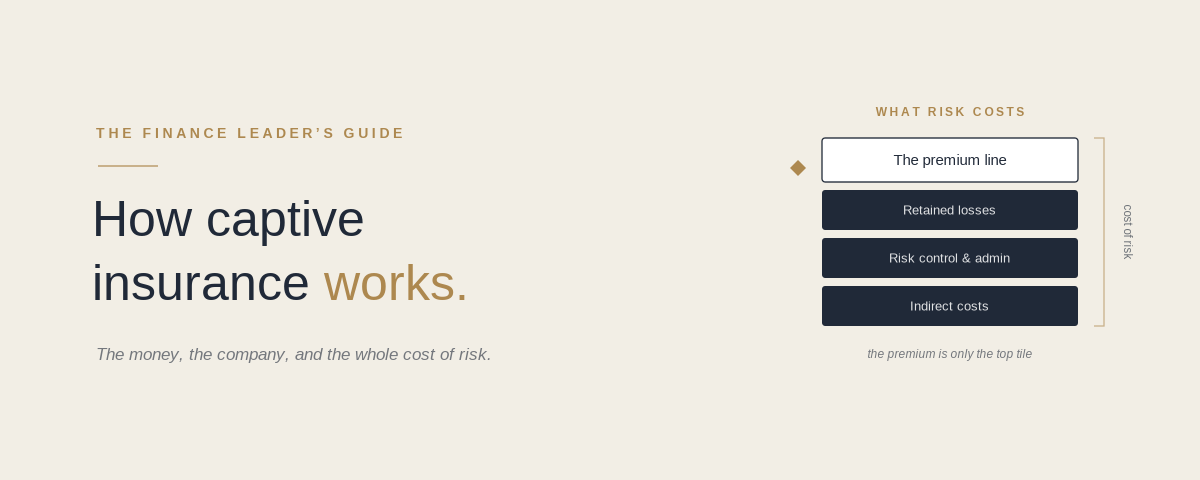
A plain-English guide for finance leaders: how a captive insurer you own actually works, why it must be real insurance, and the total-cost-of-risk lens.
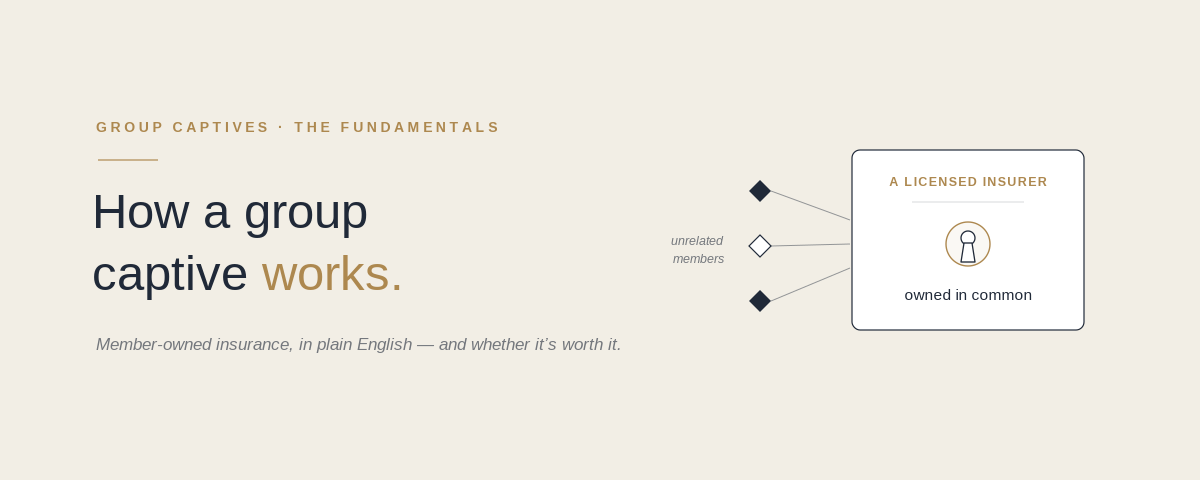
A plain-English explainer of how a group captive works — who owns it, how members share results, and an honest read on whether it’s worth it.
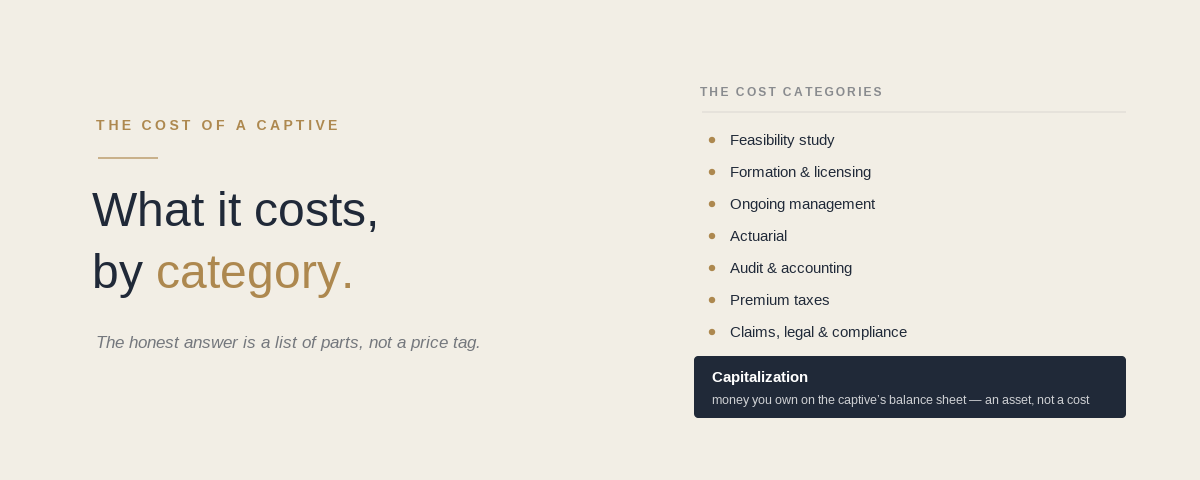
What it really costs to start a captive — broken down by category, why the number varies, and why an honest answer needs a feasibility study.
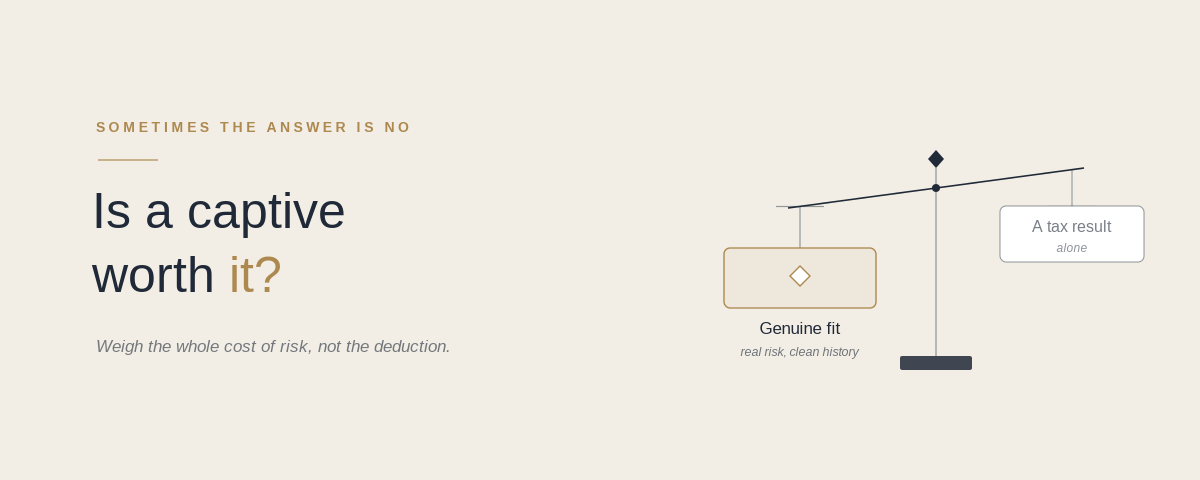
When captive insurance is worth it — and when it isn’t. A decision-stage guide to weighing fit and the whole cost of risk, not a tax result.
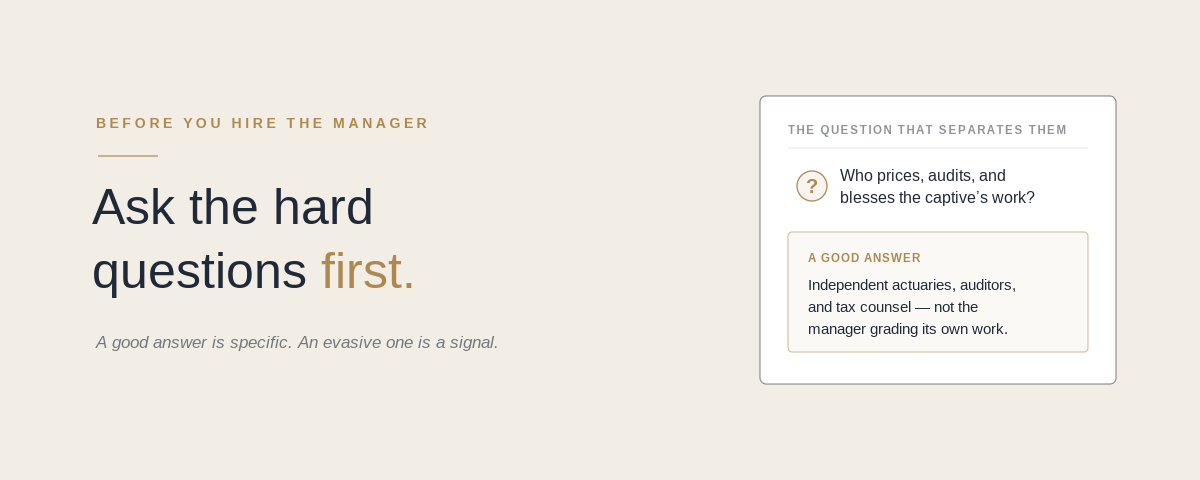
The questions to ask a prospective captive manager — and what a sound answer sounds like versus an evasive one. How to vet who you hire.
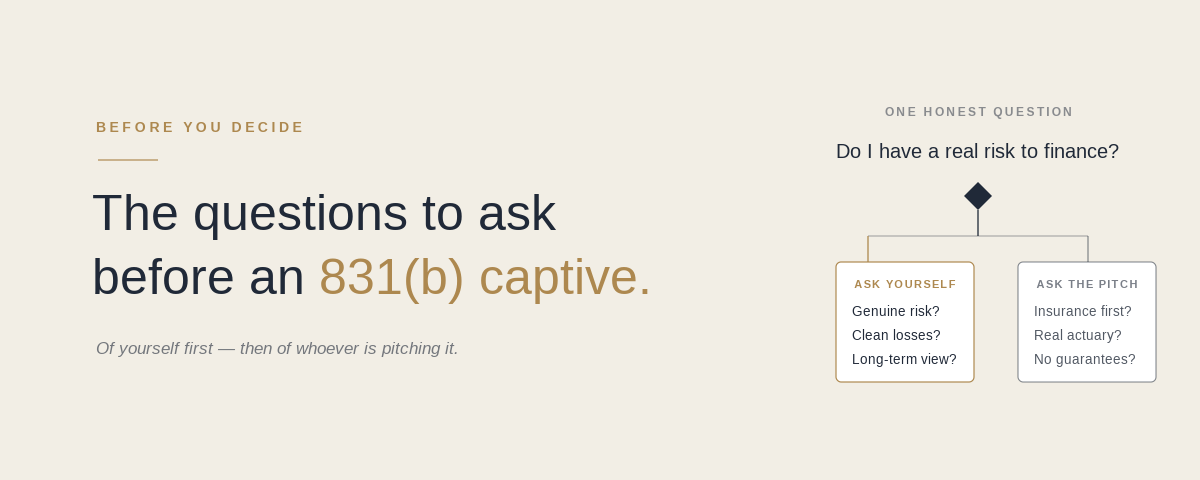
The readiness questions to ask yourself — and the red flags to watch for in how an 831(b) captive is pitched to you — before you form anything.
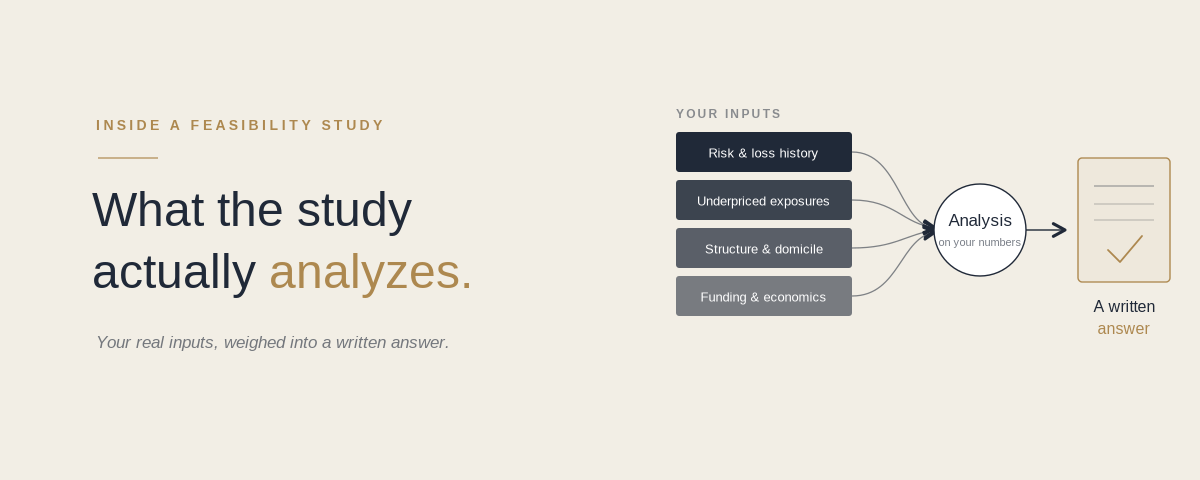
What a captive feasibility study actually analyzes — your risk, the structure, the economics — and the written answer you walk away with, yes or no.
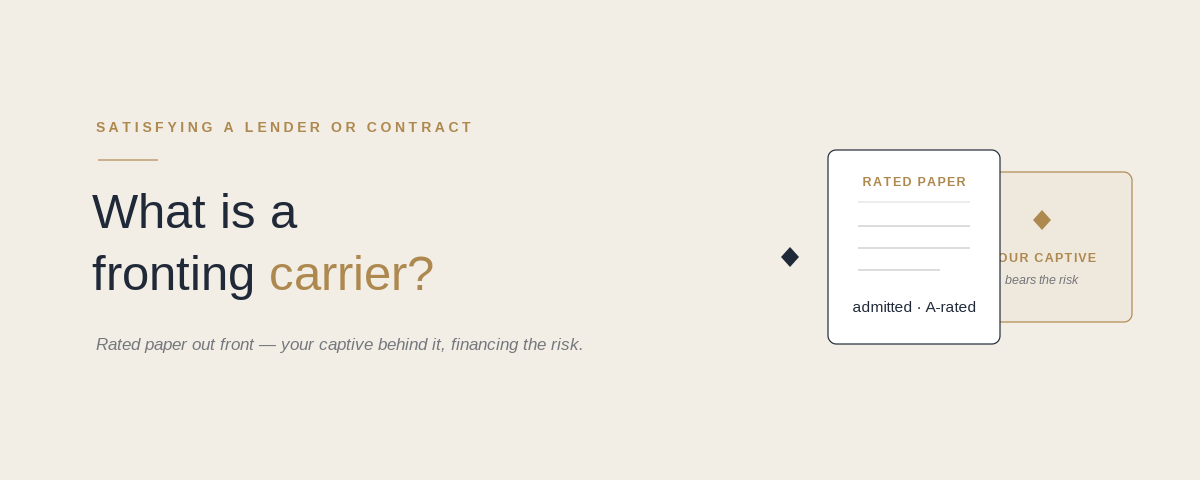
What a fronting carrier does: it issues a policy on rated, admitted paper and reinsures the risk to your captive, satisfying a lender or contract.
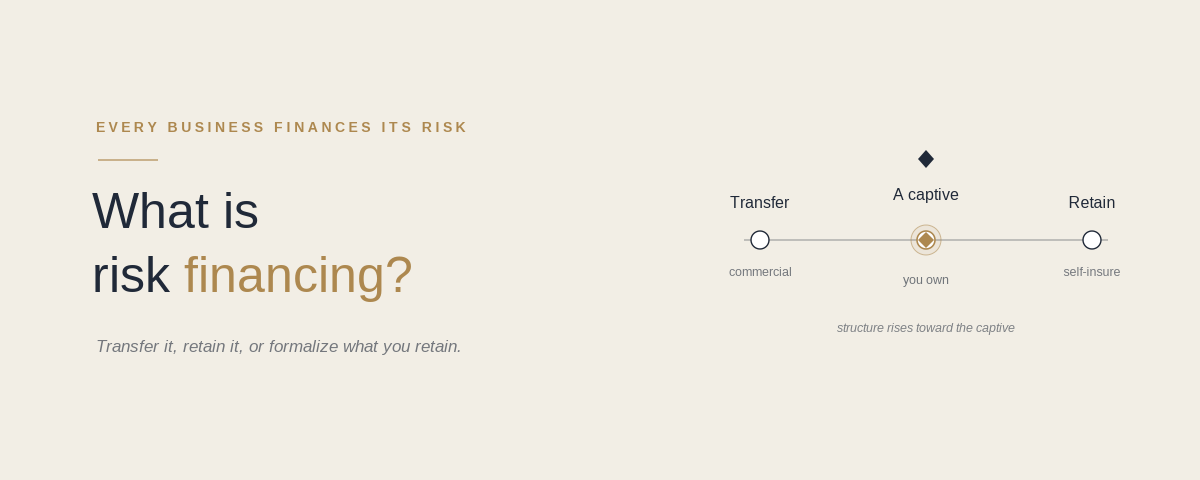
Risk financing in plain terms: how transferring, retaining, and formalizing risk differ — and where a captive you own sits on that spectrum.
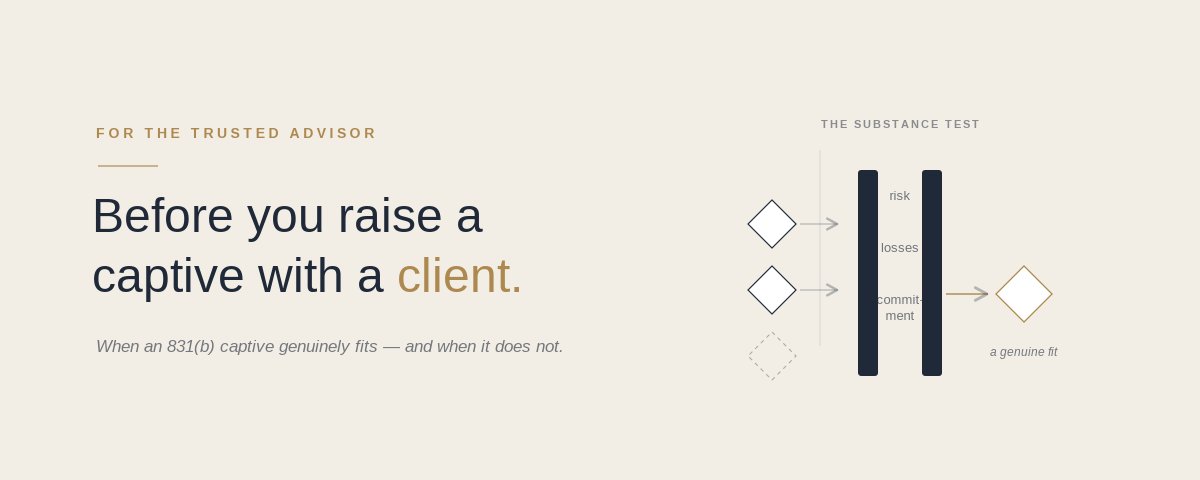
A candid guide for CPAs, attorneys, and advisors on when an 831(b) captive genuinely fits a client — and the insurance substance that makes it defensible.
How a group captive works: unrelated mid-market businesses co-own an insurer, pool working-layer risk, and share results that depend on actual losses.
How to tell whether a group captive fits a client, how the structure works, and how to vet the pool before you put your name behind it.
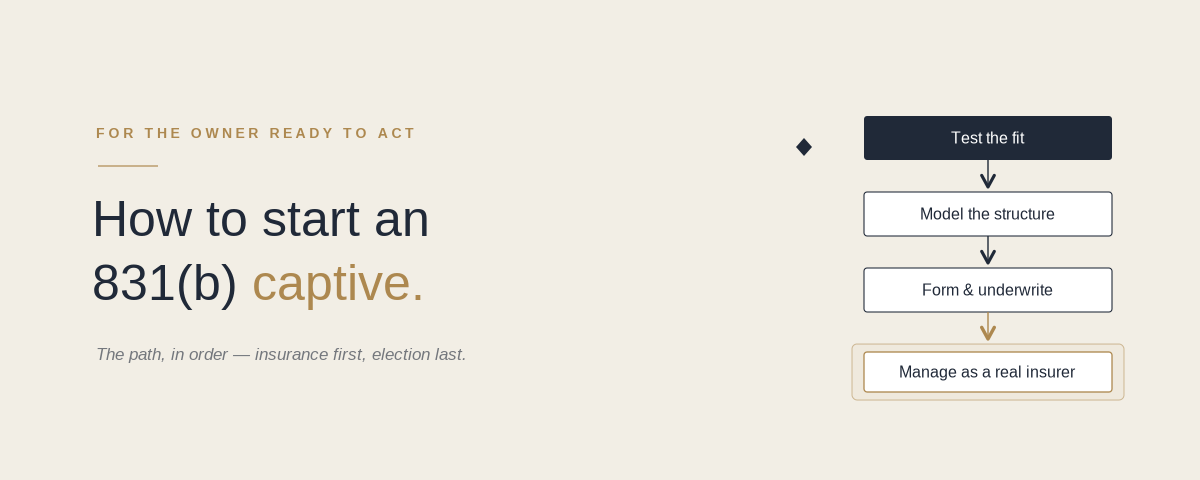
A plain, step-by-step look at forming an 831(b) micro-captive — who it fits, the path from feasibility to ongoing management, and where it doesn’t.