
What Is a Fronting Carrier? How Captives Satisfy Lender and Contract Insurance Requirements
You have done the work. You ran the feasibility study, your risk genuinely supports a captive, and you are ready to finance your own exposures through an insurance company you own. Then a banker, a landlord, or a contract counterparty reads a single line of the requirement back to you: coverage must be provided by an admitted, A-rated carrier. And your captive is neither. It is licensed in its domicile to do exactly what it does — but it is not admitted in the state where the risk sits, and it does not carry a financial-strength rating from a rating agency.
This is one of the most common practical objections owners run into, and it has a clean, standard answer that the insurance market has used for decades: a fronting carrier. This piece explains, in plain English, what a fronting carrier does, how the risk and premium move between the front and your captive, why the fronting carrier charges what it does, and where fronting fits for both single-owner and group captives. The short version: fronting changes who issues the paper, not whether you have genuine insurance.
The real-world objection: “we need a rated, admitted carrier”
Plenty of obligations are written to require insurance from a recognized carrier, and they are written that way for a reasonable purpose. A lender financing your building wants assurance that, if the building burns, a financially sound insurer will pay — so the loan covenant requires coverage from an admitted carrier carrying a strong rating. A commercial landlord wants the same comfort before handing you the keys. A general contractor will not let a subcontractor onto the site without a certificate of insurance from a rated carrier. And some coverages are required by statute: workers’ compensation, in most states, has to be written on admitted paper, with filings the state recognizes.
Two words in those requirements are doing the work, and they are worth separating:
- Admitted means the insurer is licensed by the state’s insurance department to write that line of business in that state, and is subject to its rate, form, and solvency oversight (and, typically, its guaranty fund). A captive is licensed in its domicile, but it is generally not admitted in the state where a given risk sits.
- Rated means an independent rating agency has assigned the insurer a financial-strength grade — the familiar A-range marks third parties rely on as shorthand for “this company can pay its claims.” Captives are typically not rated; they are small, single-purpose insurers, not carriers seeking a public rating.
So the objection is not really about whether your captive is legitimate. It is that the third party’s paperwork demands a form of paper your captive does not, by its nature, produce. That is precisely the gap a fronting carrier fills.
What a fronting carrier actually does
A fronting carrier is a licensed, admitted, rated insurer that issues the policy on its own paper on behalf of your captive. The certificate that goes to your lender or counterparty carries the fronting carrier’s name and its rating. From the outside, it looks like — and legally is — a policy from an admitted, rated carrier, because it is.
But the economics sit somewhere else. Through a pair of agreements — a fronting agreement and a reinsurance agreement — the fronting carrier passes the risk and the premium through to your captive. The fronting carrier cedes the premium it collected, less a fronting fee, to your captive, and your captive reinsures the risk. In plain terms: the rated carrier stands in front and issues the paper; your captive stands behind it and finances the risk. Legally the rated carrier is the insurer of record; economically your captive bears the loss.
Here is the flow in one picture.
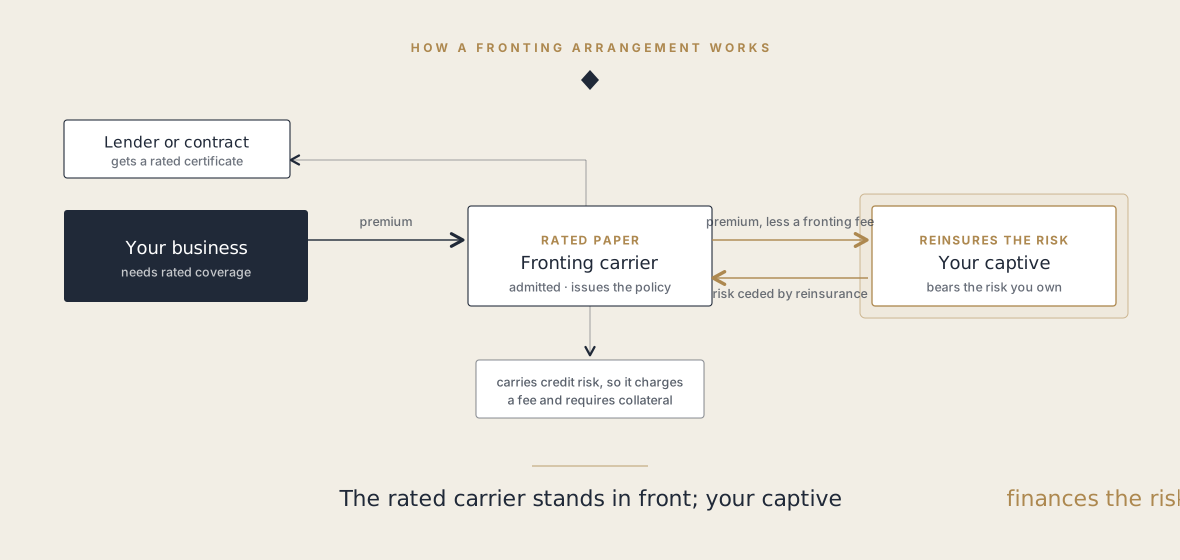
The thing to hold onto is that none of this manufactures insurance out of nothing. The fronting carrier is not pretending to insure a risk it has quietly handed off in secret; reinsurance between a primary carrier and another insurer is an ordinary, well-understood market arrangement. What fronting does is let your captive supply the substance — the risk financing — while a rated insurer supplies the form the outside party requires.
How the risk and premium move
It helps to trace the money and the risk separately, because they travel in opposite directions.
The premium travels toward your captive. Your business pays premium to the fronting carrier, just as it would to any insurer issuing its policy. The fronting carrier keeps a fronting fee for the service it provides and the exposure it takes on, then cedes the rest of the premium to your captive under the reinsurance agreement. So most of the premium dollar ends up where the risk financing actually happens — inside the insurance company you own.
The risk travels toward your captive too. Under the reinsurance agreement, your captive reinsures the risk the fronting carrier issued. When a covered loss happens, the fronting carrier — as the insurer of record — pays the claim to your insured, and your captive reimburses the fronting carrier for it. The economic loss lands on your captive’s balance sheet, which is the whole point: your captive is financing the risk you chose to retain through insurance you own.
Notice what has not changed. The captive behind the front still has to be real insurance to function. Fronting does not relax the requirement that the arrangement genuinely shift risk away from the insured and distribute it across a pool of independent exposures — the long-standing test for what counts as insurance (Helvering v. Le Gierse, 312 U.S. 531 (1941)). A captive that does not work as insurance does not become legitimate because a rated carrier issued its paper. The front changes the name on the certificate; the substance behind it still has to be real. (This is general educational information, not legal or tax advice — see our disclosures, and review any specific structure with your own qualified advisors.)
Why the fronting carrier charges a fee — and wants collateral
A fair question is why the fronting carrier should be paid at all, if your captive is taking the risk. The answer is that the fronting carrier is taking on something real: credit risk.
Remember that the fronting carrier is the insurer of record. Its name is on the policy, and it owes the insured if a covered loss occurs — regardless of what your captive does. The reinsurance agreement obligates your captive to reimburse the fronting carrier, but agreements are only as good as the counterparty behind them. If your captive could not pay — if it were underfunded, or simply failed — the fronting carrier would still be on the hook to the insured. It has, in effect, lent its rated balance sheet to your arrangement, and it bears the risk that you cannot make it whole.
Two things follow directly from that exposure:
- A fronting fee. The fronting carrier is compensated for standing in front, issuing admitted paper, handling the regulatory and filing apparatus, and carrying the credit risk of your captive. The fee is the price of borrowing a rated insurer’s standing — a real service with a real cost.
- Collateral. To protect itself against your captive failing to reimburse it, the fronting carrier typically requires collateral securing your captive’s obligation — most commonly a letter of credit, though other forms exist. The collateral is the fronting carrier’s assurance that the reinsurance behind its paper is actually good.
This is also why fronting adds cost and complexity to a captive program, and why it is not a free way to make a captive look like a national carrier. The fronting fee and the collateral are genuine considerations that belong in the modeling — which is exactly the kind of thing a feasibility study weighs before you commit, rather than a surprise you discover after formation.
Where fronting fits — for both captive routes
Fronting is not specific to one kind of captive. Wherever a third party or a statute requires rated, admitted paper, either route may use a front to satisfy it while the captive still finances the risk.
Single-owner micro-captives
A single-owner 831(b) captive typically finances enterprise and uninsured risks for one closely held business. Most of those lines do not need a front — the captive simply writes them. But the moment a financed line collides with an outside requirement, fronting comes into play. A loan covenant may insist that a particular property or liability coverage come from a rated carrier. A major contract may require a certificate the captive cannot itself issue. In those cases, the captive fronts that specific line: the rated carrier issues the policy and certificate, and the captive reinsures it. The single-owner path and how it is built are walked through in our guide on how to start an 831(b) captive.
Group captives
Fronting is especially common on the group side, because group captives so often write statutory lines. Workers’ compensation is the clearest example: in most states it must be written on admitted paper, with filings the state recognizes, so a group captive writing workers’ comp routinely uses a fronting carrier to issue the statutory policy while the members’ captive reinsures and funds the losses. Commercial auto liability, with its state filing requirements, frequently works the same way, and a member’s lender or contract may require rated certificates as well. The pooled, layered mechanics of a group captive sit behind the front; the front simply produces the admitted paper the statute or the certificate demands. Our explainer on group captive insurance for mid-market businesses covers how that pooling works in depth.
In both routes, the principle is identical, and it is the same one running under everything on this site: a captive has to work as real insurance first. Fronting does not change that. It is a market mechanism — a long-standing, unremarkable one — for satisfying a requirement that the paper come from a rated, admitted carrier, while the captive you own continues to finance the risk. It is not a workaround, not a tax maneuver, and not a way to dress up an arrangement that is not genuine insurance. It is simply how a legitimate captive meets a lender, a landlord, a contract, or a statute on the terms they are written in.
If a lender or contract requirement is the thing standing between you and a captive that otherwise fits, that is exactly the kind of practical detail a feasibility study is built to work through — modeling whether fronting makes sense for your lines, and what it would cost, before anything is formed.
Frequently asked questions
What is a fronting carrier in plain terms?
A fronting carrier is a licensed, admitted, rated insurer that issues an insurance policy on its own paper on behalf of a captive. The captive does the real risk financing, but a third party — a lender, a landlord, a contract counterparty — wants the comfort of a recognized, A-rated carrier on the certificate. The fronting carrier supplies that rated paper at the front while ceding the risk and premium, less a fronting fee, to your captive through a reinsurance arrangement.
Why would I need fronting if I own the captive?
Because some obligations are written to require an admitted, rated carrier, and a captive is typically neither admitted in the state where the risk sits nor assigned a financial-strength rating. A loan covenant, a commercial lease, a workers’ compensation statute, or a vendor contract may demand a certificate from a recognized carrier. Fronting lets your captive finance the risk while a rated insurer issues the paper the third party insists on.
Is fronting a workaround or a tax maneuver?
No. Fronting is a standard, long-established mechanism in the insurance market, and it changes who issues the paper — not whether genuine insurance exists. The captive behind the front still has to be real insurance: it must genuinely shift and distribute risk to qualify (Helvering v. Le Gierse, 312 U.S. 531 (1941)). Fronting solves a contractual or regulatory requirement for rated paper; it is not a tax structure and does not change a captive’s tax analysis.
Why does the fronting carrier charge a fee and require collateral?
Because the fronting carrier is legally on the hook. Its name is on the policy, so if your captive ever failed to reimburse it for a paid claim, the fronting carrier would still owe the insured. That is real credit risk. To be compensated for standing in front and to protect itself, the fronting carrier charges a fronting fee and typically requires collateral — commonly a letter of credit — securing the captive’s obligation to indemnify it.
Do both single-owner and group captives use fronting?
Yes. Whenever rated, admitted paper is required, either route may use a front. A single-owner 831(b) captive might front a line that a lender or contract demands from a recognized carrier; a group captive commonly fronts statutory lines like workers’ compensation, where state law and filings require an admitted insurer. In both cases the captive still finances the risk; the front simply supplies the rated certificate the outside party needs.
Feasibility Study
See whether a captive fits your business.
Every engagement starts with a feasibility study — an honest read on whether a captive is right for you before anything is formed.