

About Tessera
Nate Jones, CPCU, ARM
Captive insurance, brought within reach of the businesses it has always left out. Tessera exists to put sophisticated, legitimate risk financing in the hands of small and mid-sized companies — not just the largest corporations.
Why Tessera exists
Sophisticated risk financing should not be reserved for the few
For most of its history, captive insurance has belonged to the largest corporations and the ultra-wealthy — the organizations with the scale, the advisors, and the access to build insurance companies of their own.
Everyone else has been left renting coverage from the commercial market, handing over the premiums on their best years and absorbing the risks the market will not write. The tools that let large companies finance their own risk — captives, risk pools, alternative structures — were treated as out of reach for the small and mid-sized businesses that arguably need them most.
Tessera was founded to change that. The mission is simple to state and demanding to do well: bring the same sophisticated, legitimate risk-financing capability the largest companies have always used to the businesses that have been shut out of it. Not a shortcut, not a tax angle — real insurance, owned by the people whose risk it carries, structured to stand on its own.
That conviction shapes how we work. We would rather tell an owner a captive is not right for them than sell one that should not exist. Expanding access only means something if what we are expanding access to is the genuine article.
Experience
Built on a career spent inside alternative risk
Tessera’s authority comes from one place: the person behind it. Nate Jones has spent more than 15 years on the technical side of insurance and alternative risk — pricing it, managing it, and building businesses around it.
He earned a B.S. in Insurance and Risk Management from Indiana State University, and holds the Chartered Property Casualty Underwriter (CPCU) and Associate in Risk Management (ARM) designations — credentials grounded in the discipline of how risk is actually underwritten and financed.
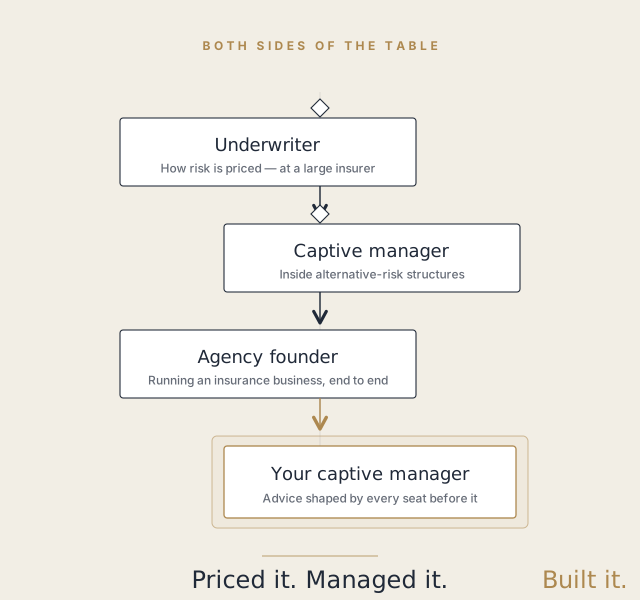
His career traces the path of the work itself. He began as an underwriter at a large insurer, learning how risk is priced and where the commercial market draws its lines. He went on to become an underwriting manager at a captive manager, working inside the alternative-risk structures most business owners never see up close. He later founded and led Wexford Insurance, a national insurance agency, as its CEO — building and running an insurance business end to end.
That arc — underwriter, captive-side manager, agency founder — is why Tessera can speak about captives plainly and honestly. The advice you get is shaped by someone who has sat on more than one side of the table and has seen what separates a structure that endures from one that draws scrutiny.
How we work
Advice first, then management
Tessera is built to advise before it manages. Every engagement starts with an honest assessment of whether a captive is right for you at all — and a clear answer when it is not.
That assessment is the feasibility study: a structured look at your risk, your loss history, and your goals, modelling whether a captive can be built as genuine insurance for your situation. Only if it makes sense do we move to formation and ongoing management — the captive-manager role, done properly and built to last.
Most owners arrive needing one of two structures. A micro-captive (831(b)) lets a single business finance the enterprise risks the commercial market underprices or will not write; a group captive lets a quality mid-market business pool working-layer risk with peers. We help you find which fits — and we structure everything to withstand scrutiny.
Feasibility Study
Let’s find out whether a captive is right for you
Start with a feasibility study — an honest, insurance-first look at your risk and whether owning it makes sense for your business.