
Questions to Ask Before Choosing a Captive Manager
Choosing a captive manager is one of the more consequential decisions you will make about a captive — arguably more consequential than the domicile or the structure, because the manager shapes both. The right one builds an arrangement that is genuine insurance and holds up under scrutiny. The wrong one builds the kind of arrangement that ends up in a Tax Court opinion. And the difference is rarely obvious from a polished pitch deck, which is why the most useful thing you can bring to the conversation is a short list of hard questions and a clear sense of what a good answer sounds like.
This piece is about that list. Not whether a captive is right for you, and not how to form one — those are separate questions covered elsewhere — but how to vet the firm you are about to hand the work to. The good news is that the questions that matter most are not technical. They are questions about independence, honesty, and who is actually checking whom. You do not need to be an actuary to ask them or to tell a straight answer from an evasive one.
The question that matters most: who marks the homework?
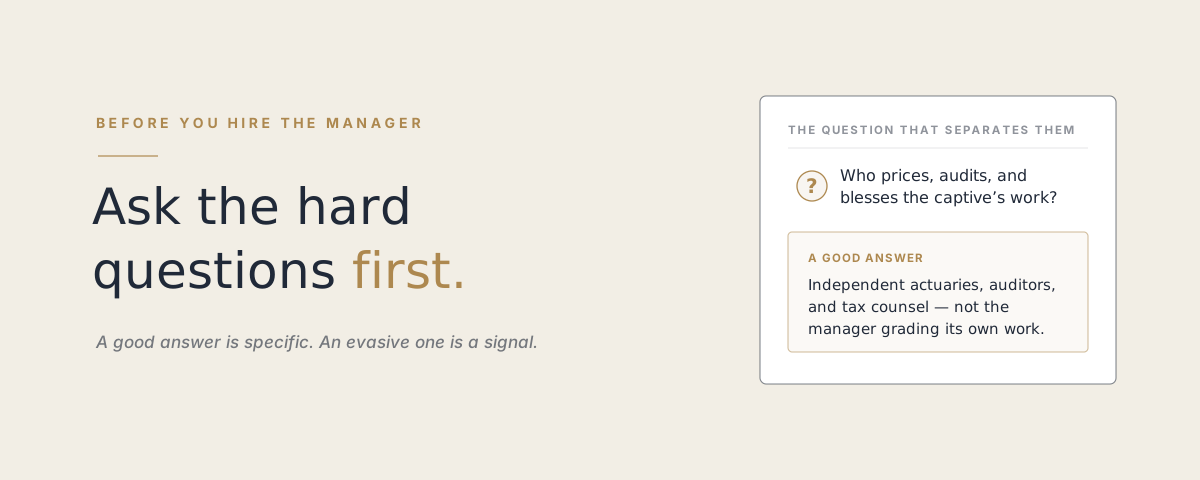
If you ask a prospective captive manager only one thing, ask this: who prices, audits, and signs off on the captive — and are they independent of you?
The reason this question sits at the top is that it gets at the structural flaw behind almost every captive arrangement the IRS has successfully challenged. The pattern in those cases was the same: the firm that built the structure also priced it, blessed it, and audited it. When one party does all of that, no one is checking the work — the pricing can drift to a convenient number, the audit can become a formality, and the whole thing rests on the manager’s say-so rather than on independent validation.
A sound manager is built the opposite way, and will say so without hesitation. A good answer names the independent parties and what each one does: independent actuaries set and validate the pricing, an independent auditor performs the insurance-company audit, independent tax counsel advises on the tax treatment, and independent accountants handle the books. The manager runs the captive — underwriting, feasibility work, ongoing management — but submits that work for outside review rather than grading it itself. This separation of functions is the single most important safeguard a manager can offer, and it is the heart of how Tessera is structured; we treat it as the deep subject it is on our compliance and legitimacy page.
An evasive answer is some version of we handle all of it in-house, end to end — delivered as a convenience rather than acknowledged as a conflict. In-house everything is not efficiency; it is the absence of an independent check. If the person across the table cannot name independent actuaries, an independent auditor, and independent tax counsel, you have learned the most important thing the meeting had to teach you.
The warning sign: a manager selling a tax outcome
The second question flows from the first: what do they lead with? A manager’s opening frame tells you almost everything about how they will build.
A legitimate manager leads with your risk. The first conversation is about what you actually need to insure, whether a captive is genuinely the right way to finance that risk, and whether the insurance case stands on its own before any tax treatment is mentioned. Tax efficiency, where it exists, is treated as a consequence of operating real insurance — never the reason to build.
A promoter leads with the tax result. The pitch is built around a deduction, often a standardized one-size structure sold to everyone regardless of their actual risk, and frequently a savings figure quoted before anyone has looked at your numbers. That is the pattern the IRS pursues. The IRS has repeatedly named abusive micro-captive arrangements on its annual Dirty Dozen list of tax scams — first listing them in 2015 and still listing them in 2024 — and it describes the abusive version in plain terms: arrangements that lack the attributes of genuine insurance, that duplicate coverage the business already has, that charge implausible, non-arm’s-length premiums, and that exist mainly to produce a tax benefit. The agency has stood up dedicated micro-captive examination teams and run settlement initiatives for taxpayers under examination. A manager whose pitch matches that description of abuse is not offering you a clever edge; they are offering you the exact arrangement under enforcement.
So listen for the tell. If the words guaranteed savings appear, or you are promised a captive is audit-proof, or the same structure is presented to you as it apparently is to everyone else, those are not selling points — they are reasons to leave. No captive is immune from examination, no structure is audit-proof, and a manager who says otherwise is either careless or selling. This is general information, not legal or tax advice — see our disclosures.
Good answer versus evasive answer
Because so much of vetting a manager is listening, it helps to have a few questions in hand alongside the kind of answer that should reassure you and the kind that should worry you. None of these is a gotcha; each is a normal question a competent manager will welcome.
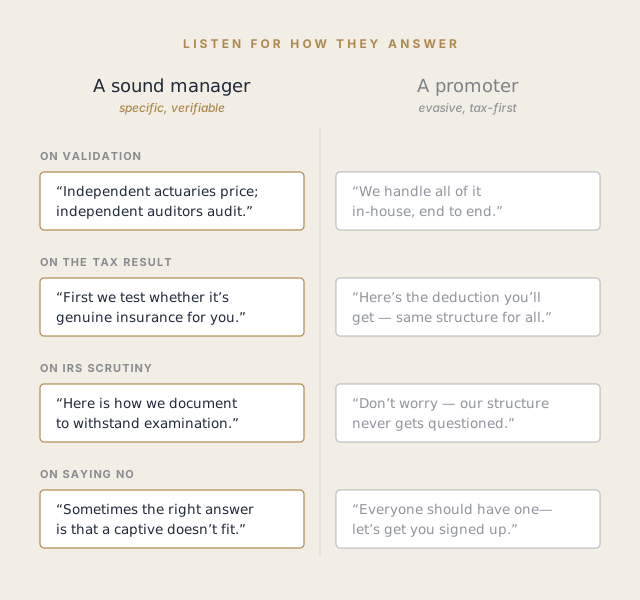
A few questions are worth asking out loud. “Who sets the premiums, and on what basis?” A good answer is that an independent actuary prices to your real loss exposure; an evasive answer talks about reaching a target or a number. “Walk me through the last captive you structured that you advised the client not to form.” A manager who has never told anyone no has either never met an unsuitable client or is not in the habit of saying it — both are concerning. “What happens if this captive is examined?” A sound answer describes the documentation, independent pricing, and arm’s-length operation that let an arrangement hold up; an evasive answer waves the question away. The content of these answers matters less than their texture: specific, verifiable, and comfortable with the hard parts versus vague, reassuring, and allergic to nuance.
Experience and track record, asked precisely
“How long have you been doing this?” is a fair question, but it is a weak one on its own — a long track record of building the wrong kind of arrangement is not a credential. Ask experience questions that get at substance.
Ask what kinds of businesses and risks the manager typically works with, and whether those resemble yours. Ask how they have handled captives through an examination or a difficult loss year, because that is where management is actually tested. Ask about the credentials of the people who will run your captive and the independent professionals they work with. And ask, plainly, whether they are willing to put you in touch with clients who have been through a full cycle — formation, renewals, claims — not just a fresh formation. A confident, well-run manager treats these as reasonable; a defensive reaction to a request for references is itself an answer.
What you are listening for underneath all of it is whether their experience is experience building genuine insurance — real risk transfer and distribution, arm’s-length pricing, clean operation — or experience producing tax structures that happen to be called insurance. The two can look similar on a résumé and could not be more different in an audit.
Transparency and who does what
A captive involves several parties, and one of the clearest signs of a sound manager is that they can tell you exactly who they are and what each one does — in writing, without being chased. Ask for the full cast: who manages the captive, who the actuary is, who audits, who provides tax counsel, who handles claims, and who does the accounting. Ask which of those are inside the manager’s own firm and which are genuinely independent, and why the split falls where it does.
Transparency extends to money and incentives. Ask how the manager is compensated, whether they have any financial interest in the structures they recommend beyond their management fee, and how fees change over the life of the captive. None of this is adversarial — it is the ordinary diligence you would apply to any professional you are trusting with something important. A manager who answers these questions readily and in writing is showing you the same discipline they will bring to running your captive. One who is cagey about who does what, or about how they get paid, is showing you that too.
Ongoing management: the part the pitch skips
Most of what a captive manager does happens after the captive is formed, and it is the part a sales-driven pitch tends to skim. A captive is an operating insurance company with continuous obligations, and the rigor of ongoing management is what keeps it both compliant and genuinely useful year after year.
Ask, specifically, who handles the regulatory filings the captive’s domicile requires and how deadlines are tracked. Ask how the annual insurance-company audit is conducted and by whom. Ask how claims are administered — because a captive that never seems to pay a claim is a captive that may not be operating like real insurance. Ask how pricing and renewals are revisited each year, and by which independent actuary. And ask what you, as the owner, actually receive and when — financial statements, filings, board materials — so that you can see the captive being run rather than take it on faith.
The texture of these answers tells you whether ongoing management is a discipline or an afterthought. A manager who can walk you through the annual cycle in concrete terms, naming the independent parties and the deliverables, is describing a captive that operates like the insurance company it is. A manager who answers with we take care of everything and little else may be describing a captive that exists more on paper than in operation — which is exactly the kind that does not hold up.
Bring the questions to a feasibility study
You do not have to run this interview in a vacuum. The natural place for these questions to get answered — honestly, against your own facts — is a feasibility study, because the way a firm conducts one tells you how it will conduct everything. A genuine study examines your real risk and loss history, tests whether a captive could function as genuine insurance for you, models your whole cost of risk, and is willing to come back with a no. A manager whose “study” is really a sales process pointed at a predetermined yes has answered your most important questions before you even ask them.
Whichever route fits your situation, the same diligence applies. If you are a single, closely held business weighing a micro-captive, the mechanics and the fit-test are walked through in how to start an 831(b) captive, and the structure itself on our micro-captives and 831(b) page. If you are a mid-market business considering a group captive, the model and its own honest account of when it does not fit are covered in group captive insurance for mid-market businesses, and the structure on our group captives page. A good manager serves either route the same way: insurance first, independence built in, and the willingness to tell you the truth.
So before you choose, ask the hard questions — and pay as much attention to how they are answered as to what is said. The right manager will not flinch. A feasibility study is where those answers get tested against your own numbers, and where an honest evaluation either earns your trust or saves you from a decision you would regret.
Frequently asked questions
What is the single most important question to ask a captive manager?
Ask who actually prices, audits, and signs off on the captive — and whether those parties are independent of the manager. A sound answer names independent actuaries who set pricing, an independent auditor who performs the insurance-company audit, and independent tax counsel who advises on tax treatment. A worrying answer is some version of we do all of it in-house. When one firm builds, prices, blesses, and audits its own work, no one is checking it — the exact pattern behind the arrangements the IRS has challenged. The deeper treatment is on our compliance and legitimacy page.
How can I tell a legitimate captive manager from a promoter?
Listen to what they lead with and how they answer. A legitimate manager leads with your insurance problem — real risk, whether a captive genuinely fits, and a willingness to tell you no. A promoter leads with the tax result, sells one standardized structure to everyone, and quotes savings before seeing your numbers. The IRS has repeatedly named abusive micro-captive arrangements on its annual Dirty Dozen list of tax scams, describing them as arrangements that lack the attributes of real insurance and exist mainly for a deduction. A manager who sounds like that description is the warning sign. This is general information, not legal or tax advice — see our disclosures.
Does the right captive manager make my captive audit-proof?
No — and any manager who suggests otherwise has told you something important about them. No captive is immune from examination, and no structure is audit-proof; there is no such thing. What a good manager does is reduce the likelihood of problems and put the arrangement in a position to hold up if it is reviewed — through genuine risk transfer and distribution, independent actuarial pricing, arm’s-length operation, and complete documentation. A promise that you will never be questioned is not reassurance; it is a reason to walk away. This is general information, not legal or tax advice — see our disclosures.
What should I ask about a manager’s ongoing service, not just setup?
Ask exactly who does what after the captive is formed — and get specifics. A captive is an operating insurance company with year-round obligations: regulatory filings in its domicile, the annual insurance-company audit, actuarial review, claims handling, and accounting. Ask who performs each of those, how renewals and pricing are revisited each year, and what you receive and when. Vague answers about full-service management without naming the independent parties or the actual deliverables are a sign the ongoing rigor may not be there.
Feasibility Study
See whether a captive fits your business.
Every engagement starts with a feasibility study — an honest read on whether a captive is right for you before anything is formed.